
Enterprises do not need another support bot. They need an AI-native support operations system.
When customer entry spans ecommerce, social, websites, WeChat, WeCom, and private-domain groups, and service delivery involves internal teams, fulfillment partners, and actual executors, auto-reply is not enough. Aijia Customer Service brings customer identity, service cases, knowledge assets, back-office verification, human review, evidence, and enterprise governance into one scalable operating system.
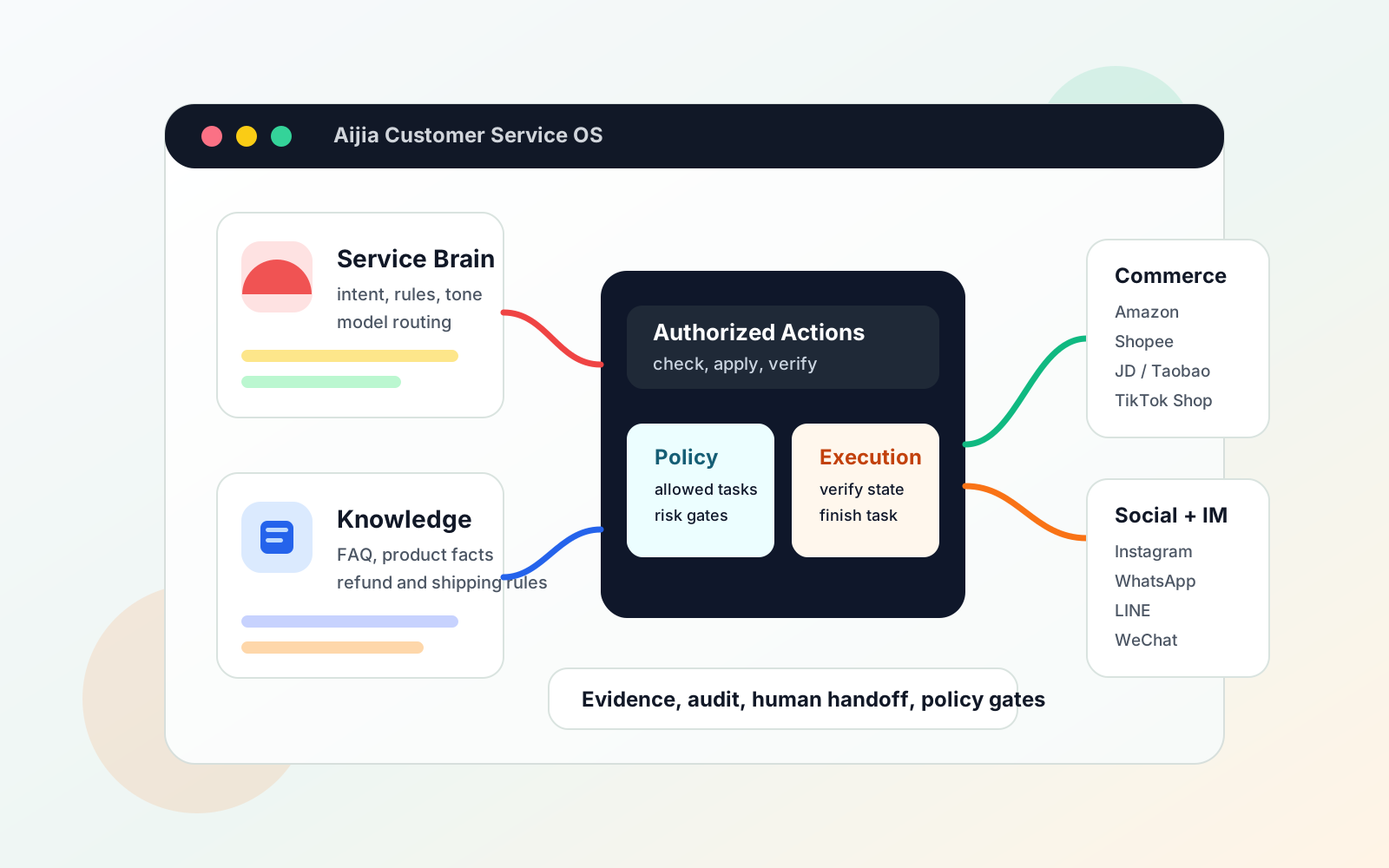
Move from conversation management to enterprise service operations management.
Enterprise buyers should evaluate more than answer accuracy. They need organization context, business context, permissions, review, evidence, and continuous improvement.
Omnichannel customer reception
Unify requests from ecommerce, social, messaging, websites, WeChat, WeCom, and customer groups to reduce back-office switching and repeated judgment.
Business conversations and service cases
Attach fragmented messages to customer identity and service cases, with current state, prior commitments, waiting object, and next action.
Private-domain collaboration operations
Coordinate customer contacts, actual executors, internal teams, and fulfillment partners while tracking who is waiting for whom and what is complete.
Knowledge and wording assets
Manage product facts, service rules, risk boundaries, brand wording, review findings, and standard replies as publishable and renewable assets.
Back-office verification and action suggestions
Verify orders, progress, materials, after-sales status, and service state within authorized boundaries before creating customer-facing replies or internal action suggestions.
Review, access control, and evidence chain
Govern automation boundaries by customer, brand, store, team, role, and risk level, while preserving review records, screenshots, and result writeback.
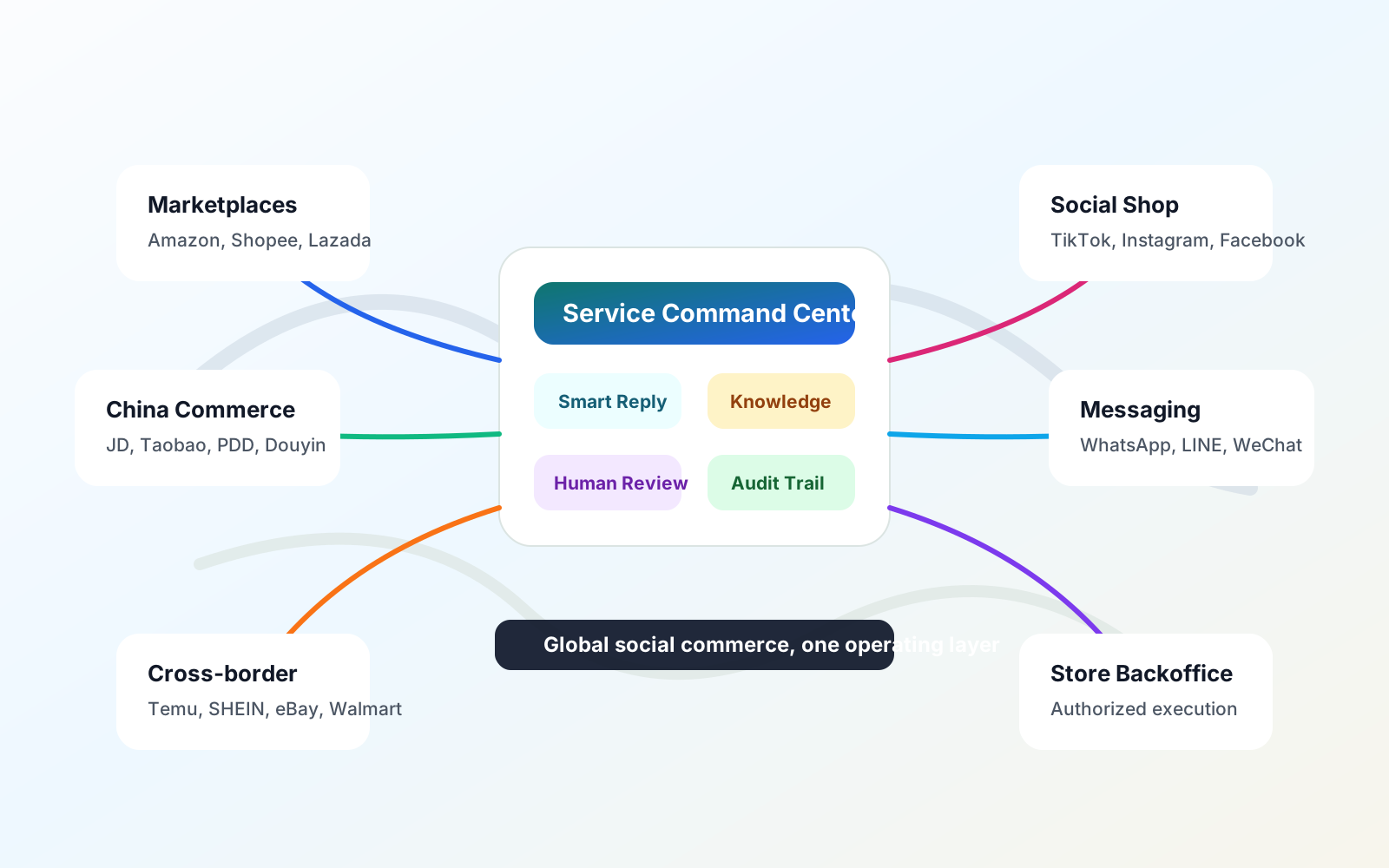
Enterprise value comes from three loops: customer context, service execution, and operations governance.
After a customer request enters, Aijia Customer Service identifies identity and service case, uses knowledge, context, and authorized verification to draft replies or action suggestions, then turns results into new operating assets through human review, evidence, and continuous improvement.
Customer context
Who the customer is, which channels they use, which case is active, and what was promised before.
Service execution
Whether to reply, verify, wait for the customer, ask a partner, route to review, or write completion back.
Operations governance
What can be automated, what requires review, whether evidence is complete, and how experience becomes reusable assets.
When AI support enters real enterprise workflows, governance becomes delivery capability.
Enterprises are not only buying a model that answers questions. They are building a scalable, reviewable, auditable, continuously improving customer service capability.
Higher consistency
Service wording, risk boundaries, customer-safe language, and review rules are governed centrally instead of varying by agent, team, and channel.
Less coordination loss
Waiting states across customer groups, internal teams, fulfillment partners, and actual executors become visible, reducing missed follow-up, wrong sending, and repeated confirmation.
Stronger risk control
Refunds, compensation, promises, disputes, account permissions, and uncertain cases enter human review so automation does not cross enterprise boundaries.
More durable service assets
Every QA review, customer feedback, handling record, and evidence sample can flow back into knowledge, workflows, wording, and management metrics.
Start with one service flow and build an enterprise AI support operations system.
Begin with a frequent, reviewable, high-impact customer service flow, then expand across private-domain, ecommerce, social, multi-team, and partner collaboration scenarios.